Growing up, we were fortunate to have all the necessities, a host of comforts, and the rare luxuries. The latter was a conscious parenting decision for which I still remain grateful.
My parents, generous in spirit and kind, practiced and imbibed in us the Living-well –but- Zero-waste concept. While brushing teeth, Mother would gently reprimand us for letting the water run. Father, the more vocal one, and would show his irritation if we left the light burning in an uninhabited room. It’s true we groaned and grimaced several times; of course we did not see this as a way of conserving scarce resources at that time. But wisdom always prevails, and as a parent, I’ve done the exactly the same. Our family has always recycled paper, plastic, and metal. I go a step further to buy products with less packaging. It’s super easy for me to eschew plastic bottled water as much as possible. Sometimes the déjà-vu grumblings happen in my family unit as well. All that sorting they did at a younger age,they sometimes seem to have forgotten. However, the seeds are already sown, and therefore, there’s hope. It makes me happy to see my daughter use her sports water bottle over and over, preferring it over single-use containers.
My son at three would wait for the Friday when the trash trucks came by. He would hear the sounds, part the curtains and watch the robotic arms lift the color-coded bins. The whole process fascinated him thoroughly, and his life ambition at three was to be a garbage truck driver. When he groans about the woes of recycling, I remind him of this.
Once my daughter’s ick-meter ran high upon seeing me use dental floss to tie the unruly Altissimo climber to the fence. Of course, one person’s trash is another’s treasure. As a result of the binding, the climbing shrub came up with a profusion of take-no-prisoners red, red roses.
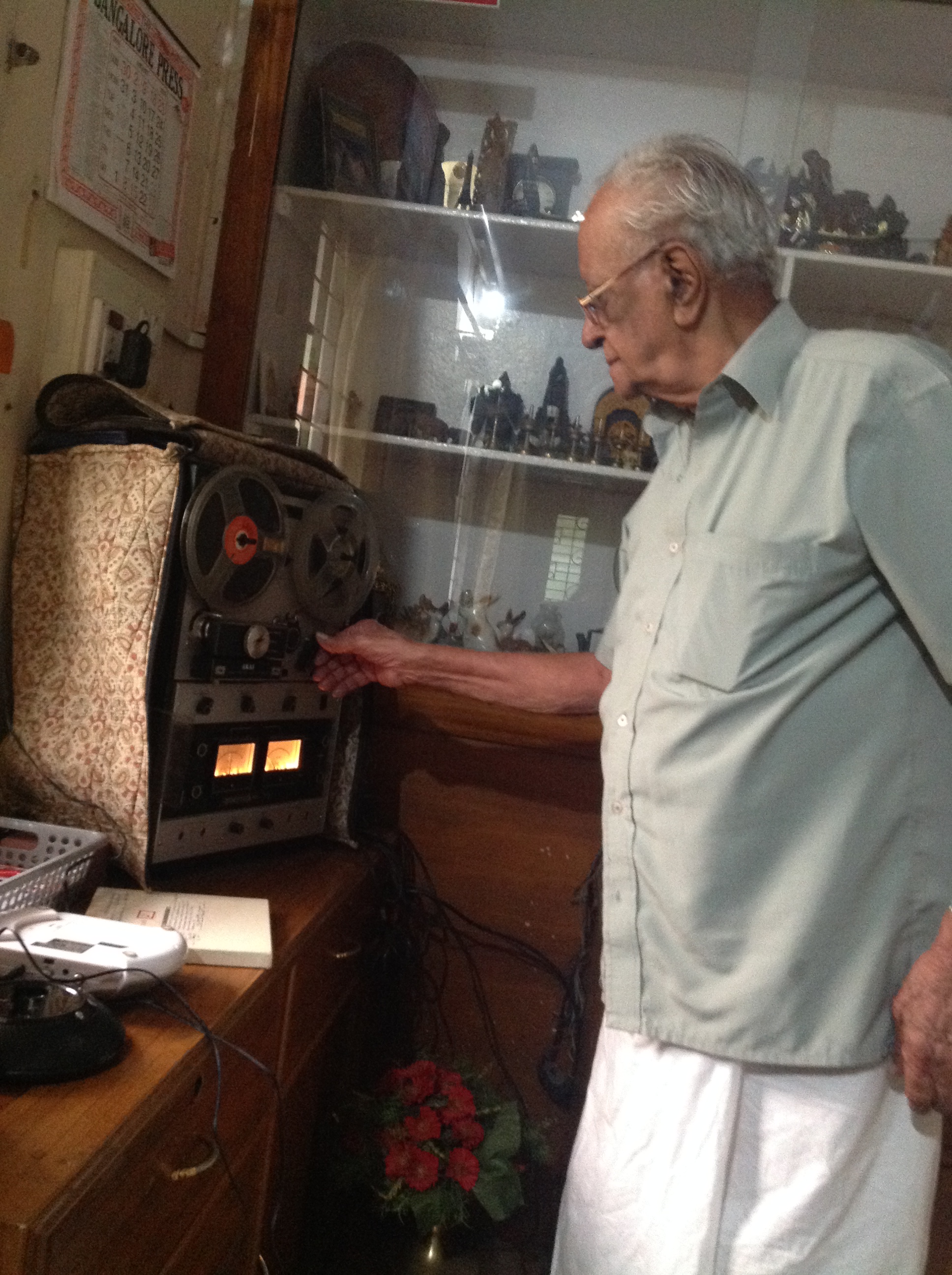
I view my parents as generous conservationists. They gave freely, but never entertained wastage. Even today my father V.S.Rajagopalan continues to surprise me. He’s no packrat, but he will preserve things that end up helping people. He has several hobbies, but the most significant ones are fixing things and collecting technology. He has fixed clocks, watches, appliances for several friends and family.

To Refuse or to Reuse?
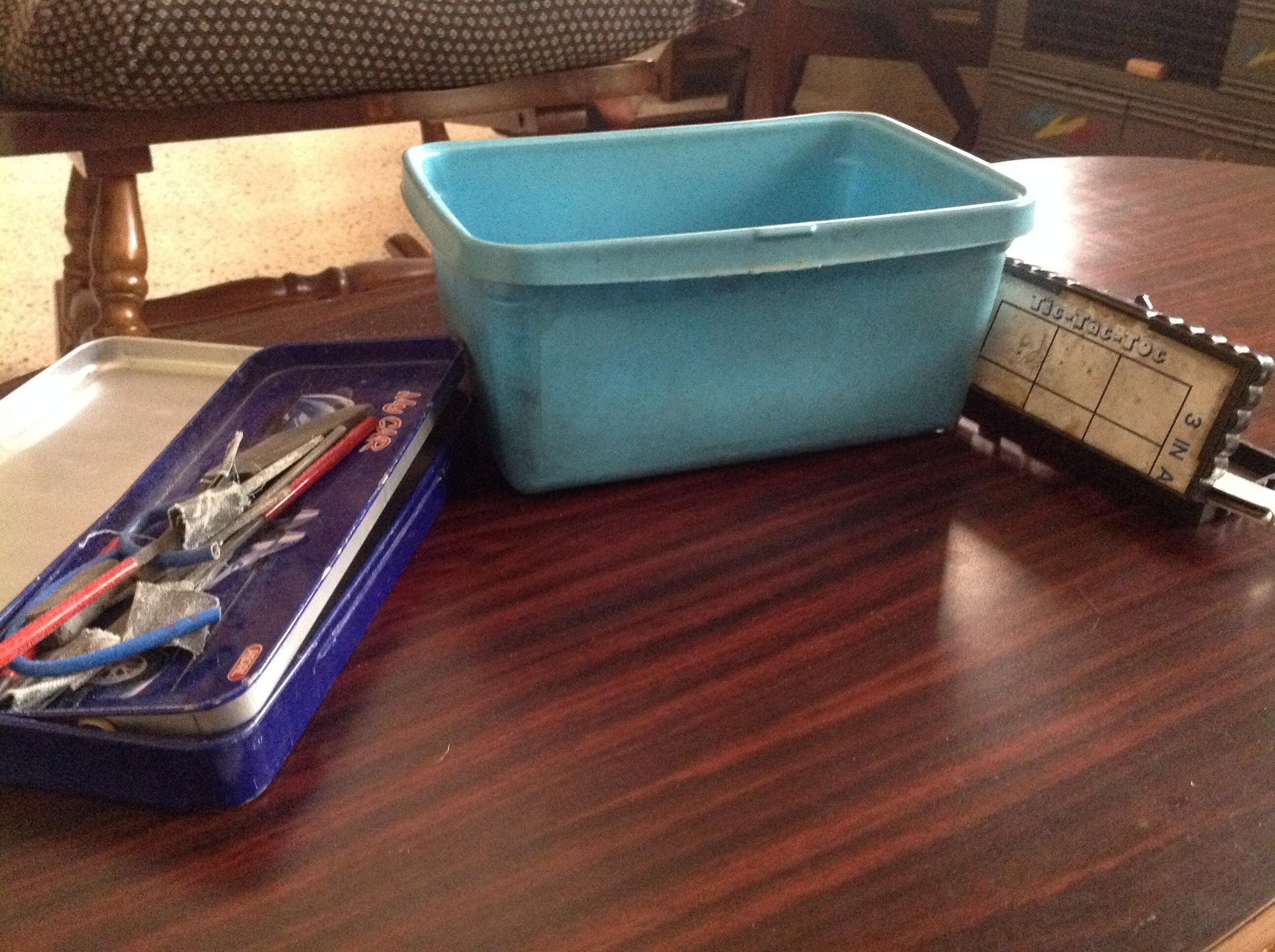
Recently, I saw the once-familiar empty plastic baby wipes box in his garage. He has stored odd screws and hardware in it. It gave me an anachronistic jolt to see something after 24 years!! An old tic-tac-toe game box with contents long gone, houses a feeler gauge. A grandchild’s empty geometry box and my much-dented metal school box serve as toolboxes.
Mr.V.S.R. can fix anything, and I recall we never had a use and throw mentality towards electrical gadgets. Does that spill over to how you treat people too, I wonder. At ninety, he has all the technology ranging from smart new devices to the wise old technology. He holds a massive collection of varied memories, voices, videos, music, celebration, recounting, and much, much more. From the 78 RPM records to the reel-to-reel spool tape recorder, cassettes, CD, VCR, DVD players, he has them all in tip-top condition. While the smart phone with Bluetooth speakers serve as his constant music companion, he will play with the other equipment as well, transferring data, which are true memories from the old to the new. He’s a treasure trove of information, rare music, and special memories. He transfers all these to share freely with his friends of all ages.

Memory Trove
The India I grew up in has changed drastically. Globalization and convenience have brought in immense packaging and decreased biodegradable products. Take-out snack packaging used to be degradable; dosas and idlis came wrapped in banana leaf and newspaper. Today’s to-go snacks are neatly packed in plastic or cardboard boxes. Plastic of late, has taken over the world, and it has not spared the ocean either. Nowhere else is it more apparent than in a town as dense as Bengaluru.
Once known as the Pensioner’s Paradise, this city is not designed for the alarmingly high population growth it’s currently witnessing. The salubrious climate is a huge draw, but everyone seems to have a “not in my yard” attitude. Each morning, driveways and front yards of homes are swept and washed clean. There’s a nice rangoli design spread in front of the gate. Just outside, on the street, you see the deplorable litter no one cares to take responsibility for.
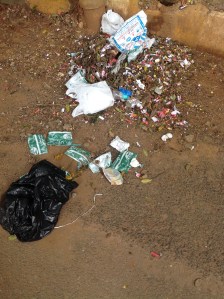
Outside the Gates
During my daily walk to the park, I photograph the empty dairy sachets along the way. Until the early Eighties, we would wake up to the clink of milk bottles delivered to the doorstep. I still remember how Mother would empty the milk into the milk pot, and she would wash the bottles to exchange them out. Almost everyone did that, unless you knew someone with a cow or a buffalo. Some would even bring the literal cash cow to the doorstep to milk it for you. When we lived as children in my grandparents’ joint family, this was a regular feature. My grandmother preferred the thick, creamy buffalo milk for coffee. She grew and roasted her own beans, used a hand cranked coffee grinder. This was an extra exercise she went through even though there were modern conveniences. She would station all her posse including yours truly to supervise the cow milker with gimlet eyes. This way she could discourage any surreptitious dilution by water. My mother-in-law, till the Nineties, often included the buffalo-milking shindig at the doorstep just for the flavor-rich experience.

Anji
In certain situations, poverty also makes one value scarce resources. This is true in Anji’s case. Inside the park, I see him and his wife Manjula sweeping up the place. His salary is quite low for the amount of work he does.
Anji has a fantastic broom. He fashions it out of found materials. The prolific areca palm trees shed fibers regularly. He sweeps the fallen leaves, other debris every alternate morn, and then he separates the palm fibers out for later use. For a very reasonable cost, he put together a similar outdoor broom for me and it works like a charm. This act may not make him a conservationist out of choice, but he gets full marks for creativity in using found, mostly organic materials.
I meet Vasumathi Srinivasan, a top-class mountaineer and my sister-in-law. We discuss the changing scenario. On the way we buy brooms made from the spines of the palmate leaves of the coconut tree. Even today, people use blades to scrape off the dry leaves, save them for lighting fires, and gather the spines to make brooms. Vasumathi remembers her mother encouraging the children to make these brooms while growing up. My grandmother was one other person who believed in saving those spines for broom use. Nothing went for waste in her generous home that housed, employed, and fed several people. Nada, zip, zilch! Waste was vulgar a few decades ago, and somehow there’s an insensitivity about it today.
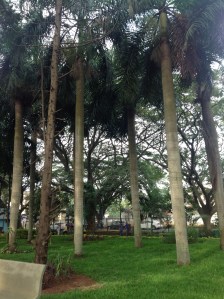
I walk briskly in the neat park, never knowing who I will bump into. Today I meet an older lady, Mrs. Parvathi.
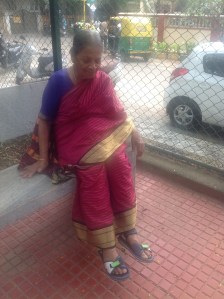
Mrs.Parvathi
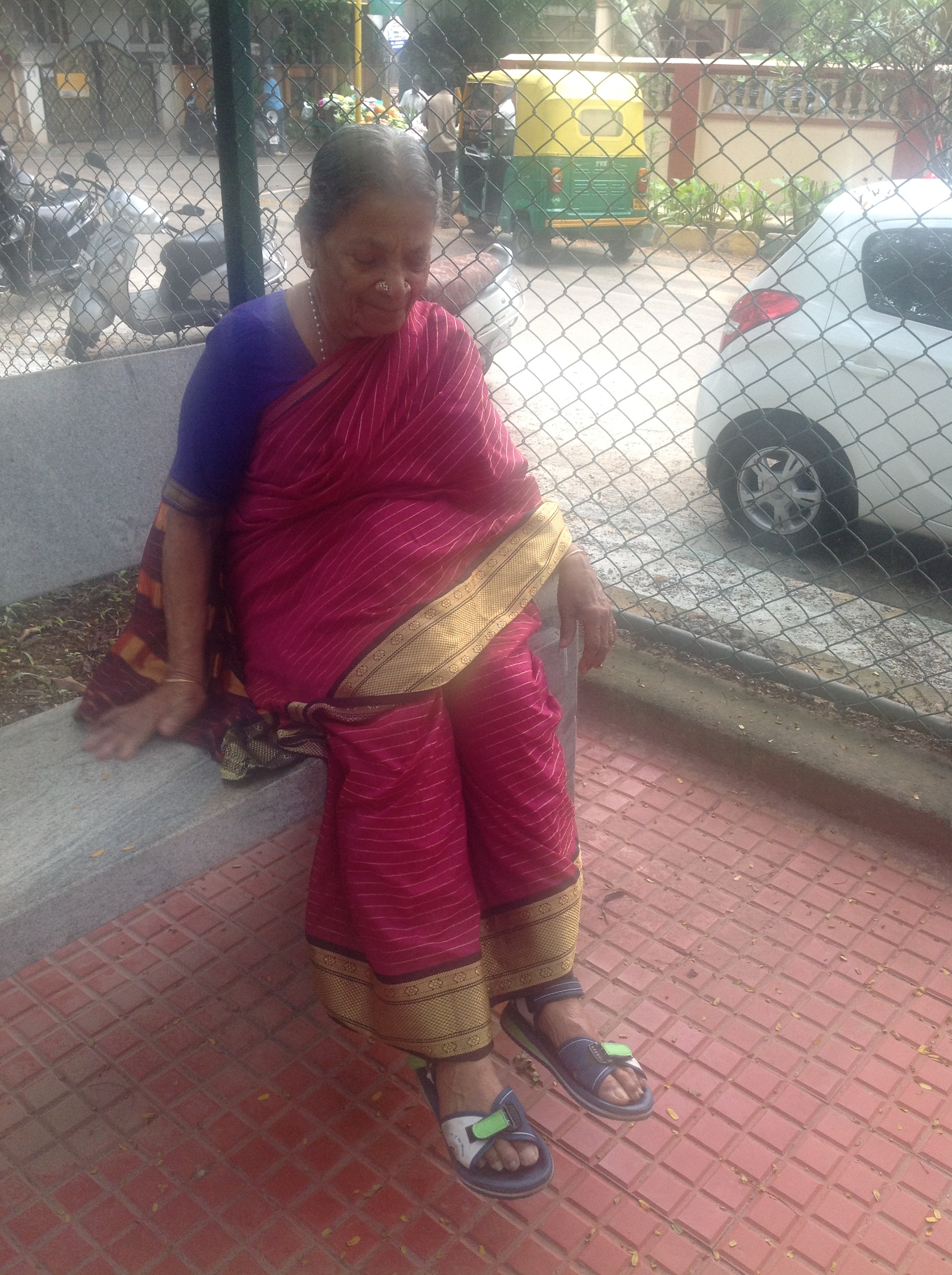
She walks slowly along the path. Her footwear looks very familiar. I recognize these! These are mostly the one-time sandals provided with the ticket at Niagara Falls for the Cave of the Winds climb. Happily she shares fond memories with me. Her son had taken her there a few years ago. She finds these sandals quite hardy and comfortable. They have to be if you have to climb series of steps to reach a wet waterfall. So she holds on to a memento and uses the same. Sportingly, she poses for my camera, when I tell her what I plan to write about. Heartily, she encourages me to do so.
Outside the park, the fruit and vegetable vendors wait. The now ubiquitous plastic swirls everywhere; the ground, the curb, the ditches. One vendor expresses relief when I withhold the plastic and ask him to fill my cloth bag. “Everyone wants plastic, because we do not charge for these like the stores do,” he informs me. A monetary price is actually a good deterrent.
A few steps away, while downing the young coconut water; I decline the straw after seeing the colored plastic tubes littered all over. If there’s an alternate way of choosing to do things without disturbing the environment, then every bit helps.
Plastic is not the ugly word here. I totally agree with Mrs. Srinivasan when she mentions it has several useful purposes. “However, it’s the misuse and overuse of plastic that’s of serious concern, ” she succinctly concludes.
Conservationists may seem like nitpickers. The general population often subscribe to the viewpoint such people wear microscopic lens while they could easily be on to bigger and better things. There’s no excuse at what’s happening at the macro level, Bengaluru is hurting.
There are no places left to fill the garbage. Residents of Mandur went up in arms to protest the stench, the diseases, and environmental pollution. There was a promise of resolution, however, the wastage was simply rerouted to several locales. One of the locations includes a pristine area close to protected forestland. A landfill has come up in the middle of this residential neighborhood. A court case is pending now. Sooner or later more trash is going to hit the fan.
http://timesofindia.indiatimes.com/city/bengaluru/Post-Mandur-waste-heaps-up-at-Terra-Firma-landfill/articleshow/48027712.cms
It’s true that a significant amount of recycling still goes on here. However, a disposable mindset has crept in and taken control in alarming proportions. We can always learn from the past to save our future. In this light, a Native American proverb comes to mind. “We do not inherit the Earth from our Ancestors, we borrow it from our Children”

 Even today they sell similar handkerchieves in a three- pack on the street. I see them when I go to the market, and smoke gets in my eyes.


 theinkybee.com