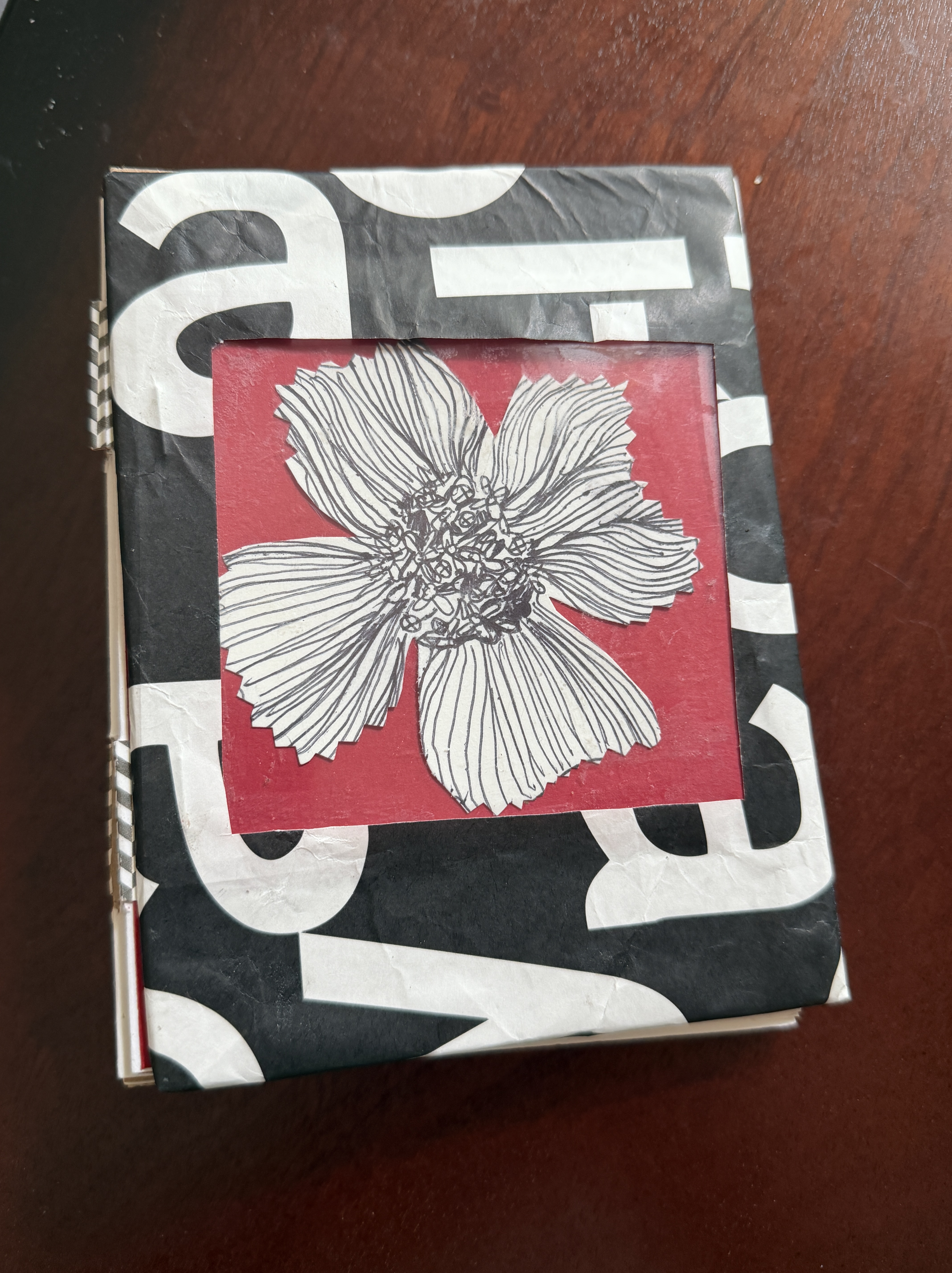
Where the memory of a gift becomes the structure of a life.
The Memory of Care
This reverse piano hinge book began with a gift from someone dear to me. What stayed with me was not just the object itself, but the depth of thoughtfulness behind it. The awareness the giver remembered me in their travels, their care in choosing my gift, the grace of its presentation came also with a story.
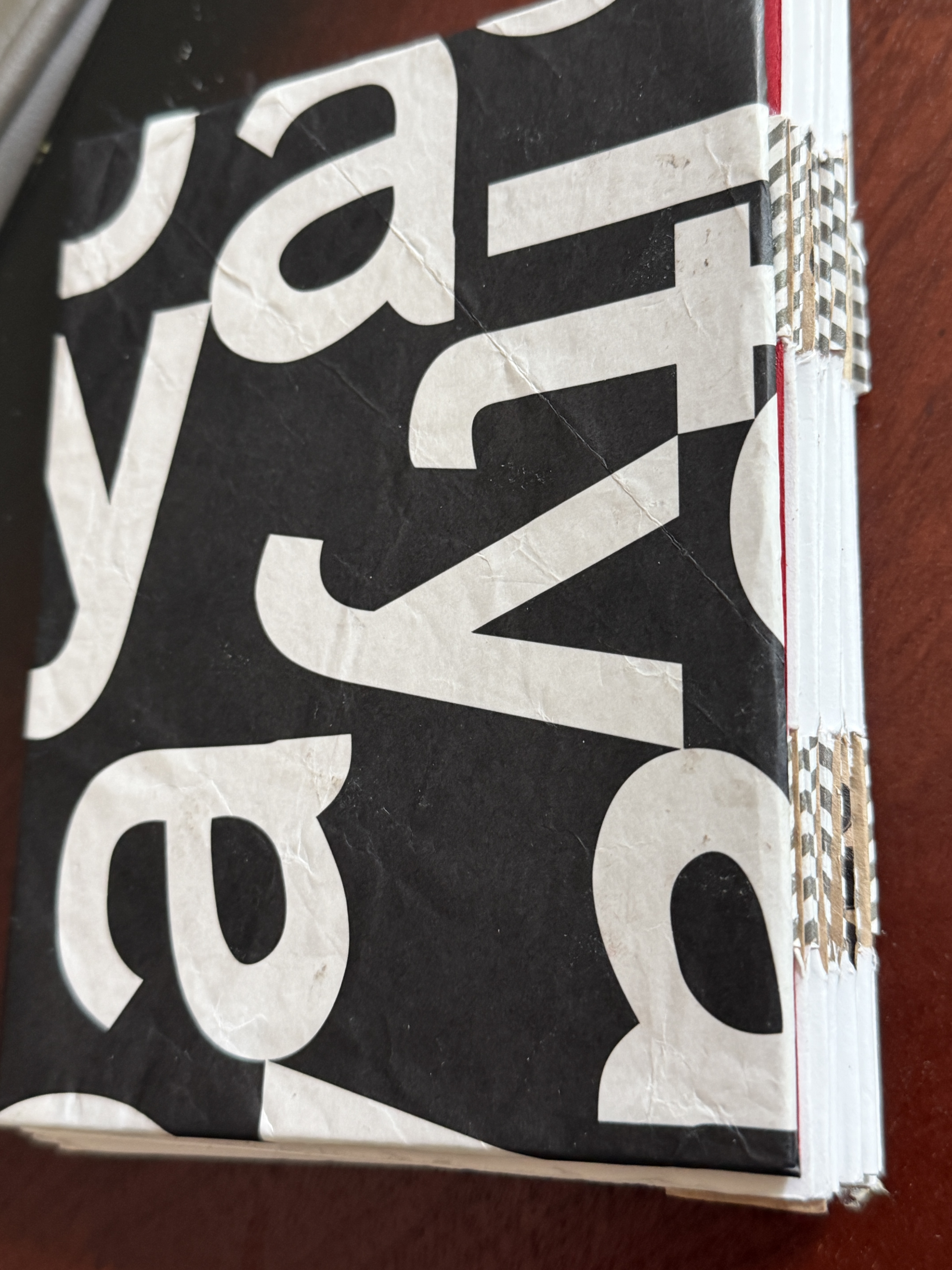
The giver described how the salesperson in Japan gently insisted on wrapping the purchase, treating a simple transaction as a moment of Omotenashi, which is wholehearted hospitality. She could have just bagged it, but she took time in slowly wrapping the gift. In the telling, that moment became a first-person experience for me. I felt the sincerity of the salesperson so clearly that the wrapping paper itself became sacred. That act of noticing and sharing by the giver became part of the gift itself. To discard the paper would be to discard the care it held. I wanted to wrap these thoughts together in the making of the book.
A Material History
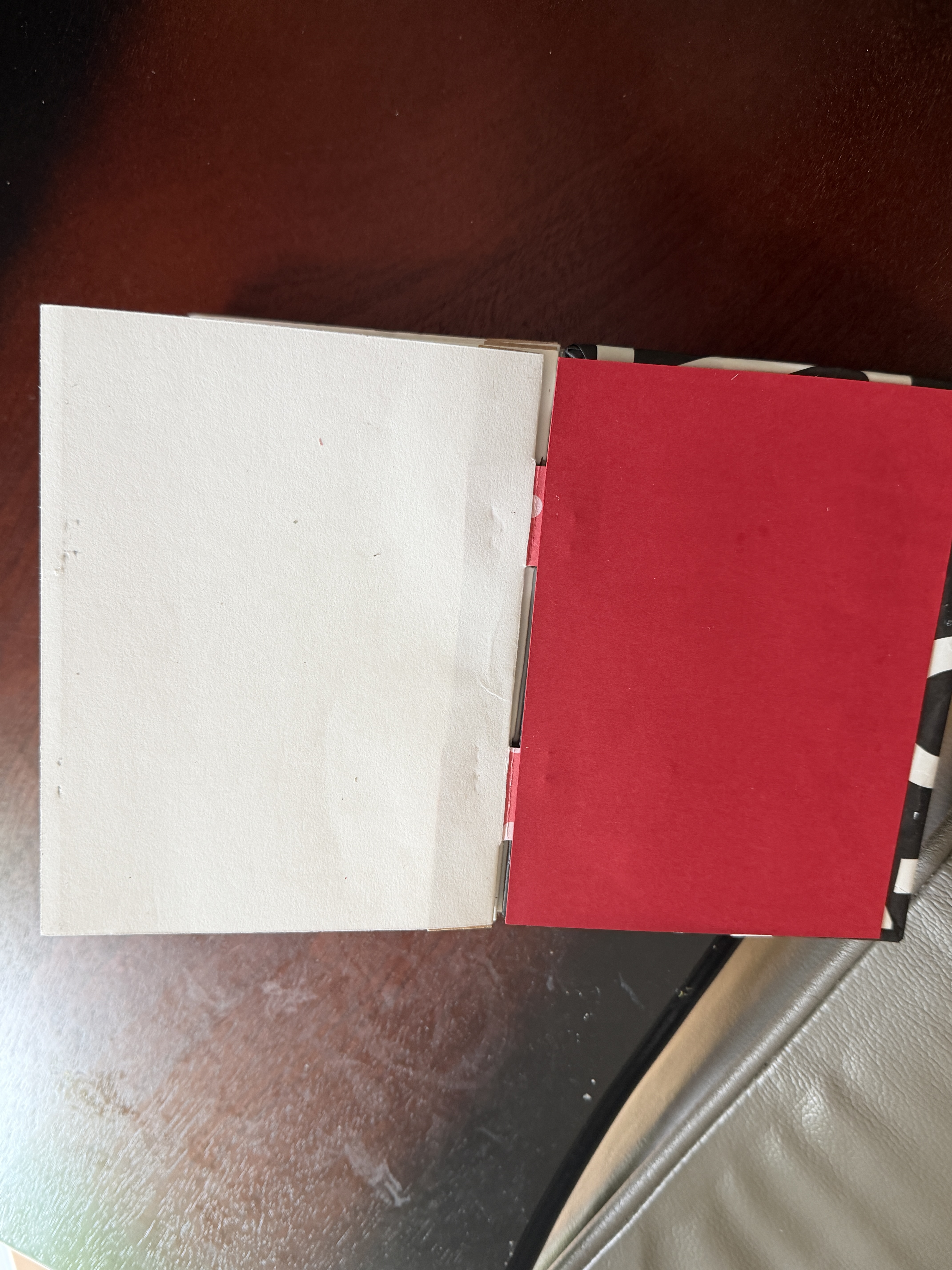
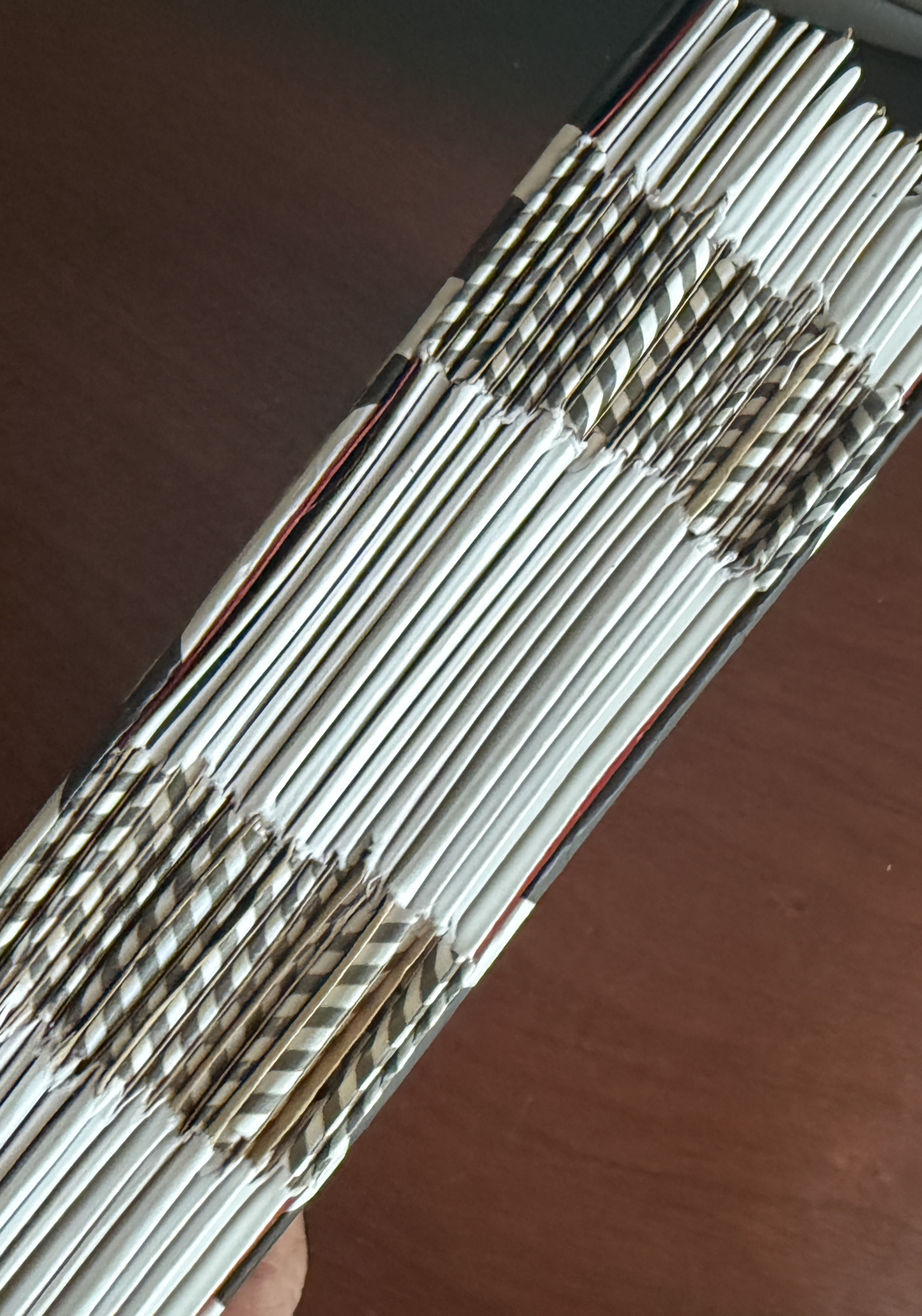
That sensibility guided the making of this book. I realized that care is not separate from the object, but embedded within it (Tsutsumi). The starting spark was the gift wrap paper that became the outer covers of the book. Every material used here has lived a previous life. A bread company’s paper bag became the inner tabs, and an oat milk container became the cover boards; off-cuts from scrapbook paper form the accordion spine; a game-night invitation printed on one side revealed a blank side for the inner cover on the other. Even a drawing made while waiting on a long customer service call finally found its home. I held on to it without hoarding, for there was a clear intuition it would tell a story someday. In this process, I carry the guidance of Sensei, where teaching endures through the physical act of making. The book making structure and slow, mindful drawing came from the generosity of two different teachers at some point in my life.
The Spirit of Making
When I cannot avoid the plastic of modern life, I respond by repurposing it. I covered my doodle with a plastic sheath, giving it protection and a sleeker look. This is the spirit of Mottainai, where nothing that still holds value is dismissed or discarded without thought.
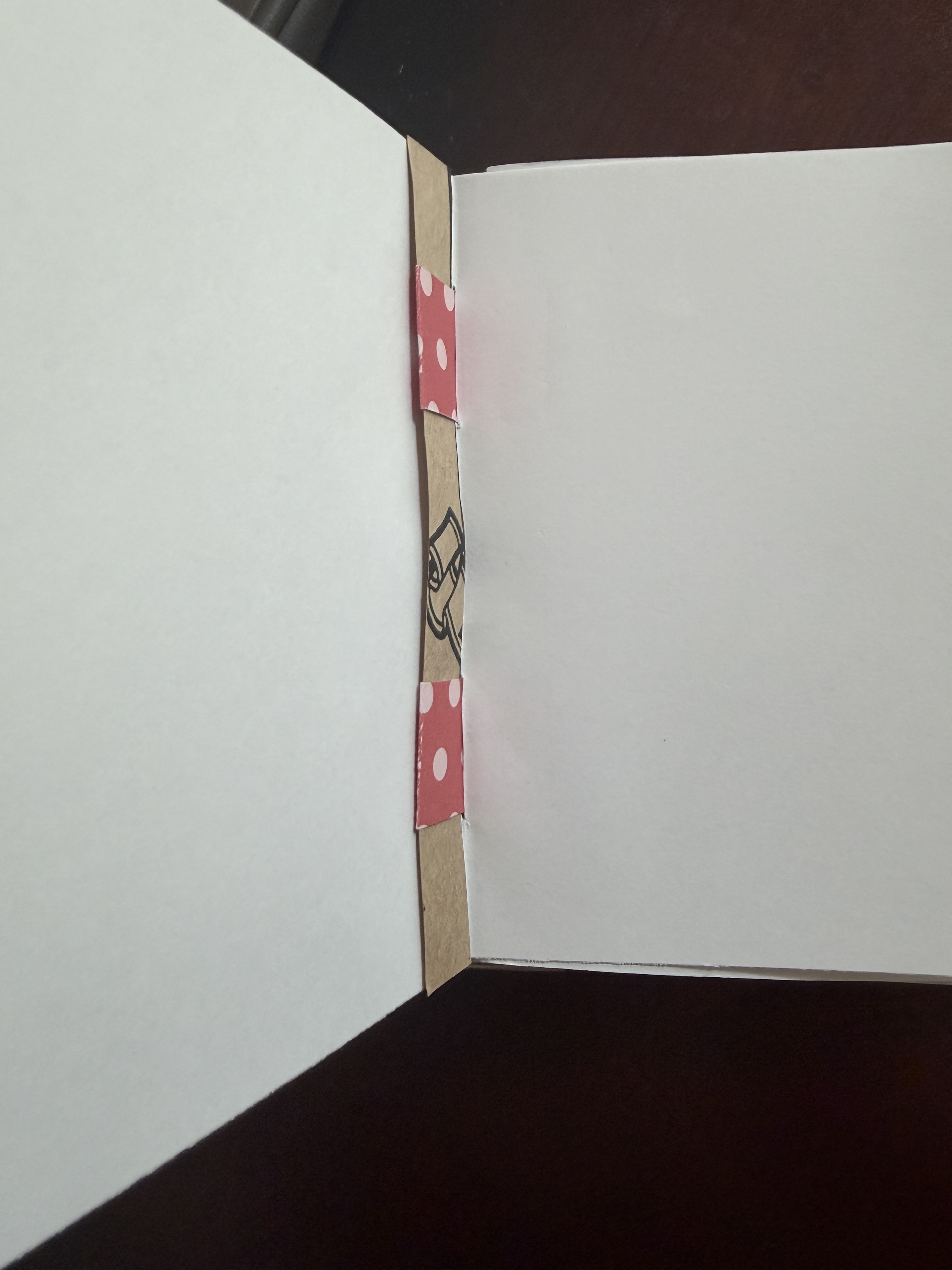
Perhaps it is not someone else’s perfection. There is also an acceptance here of Wabi-sabi, where imperfection is not corrected but allowed to remain as part of truth. Some of my edges are uneven, I could have off-set my drawing, and the paper is a bit wrinkly, revealing a history that I refuse to refine away. Underlying it all is Katachi, where meaning emerges through transformation and structure. What is gathered is not merely reused, but reshaped into a new continuity.
The Architecture of a Life
As I worked, I realized that life itself begins to mirror this paper structure. A reverse piano hinge is not a fixed spine, but a series of connections that allow for constant turning and re-folding. In life, we are rarely building something entirely new; instead, we are continuing what already exists, hinging the memories of the past to the possibilities of the present. Like the spine of this book, our days are held together by these small, repeated gestures of care. We are not rigid; we are a layered narrative, capable of opening in multiple directions, revealing hidden sides of ourselves just as the game invitation revealed its blank inner cover.
A Continuing Gesture
The result is a book that feels lived , as though it carries more time than its making. It is less about constructing something new and more about continuing what already exists.Each element holds a trace of its past, forming a layered narrative of what was given, what was kept, and what refused to be thrown away.
The original gift now has a continuing story, and it does not end with the final wrap. How it will be used, the marks yet to be made on its pages, and the hands that will turn its hinges are simply the next layer of its history. What was once received with care is now made with care, and eventually, it may very well be lived with care.
 theinkybee.com